
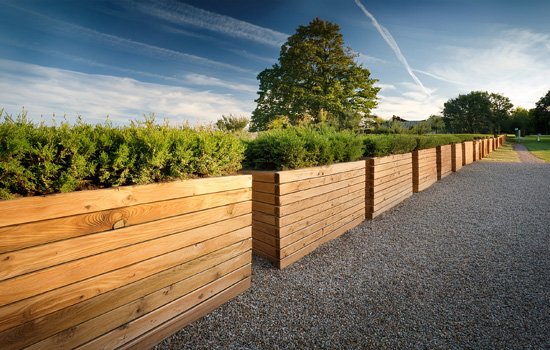
Railway sleepers have become a staple in modern British garden design. Whether you’re building raised vegetable beds, retaining walls, garden steps, or striking boundary borders, sleepers offer unmatched rustic appeal and structural strength. But when planning your project, the first major decision you’ll face is: should you choose pressure-treated softwood sleepers or fresh sawn European oak sleepers?
In this guide, we compare lifespan, maintenance, chemical safety for edible crops, aesthetic weathering, and cost to help you choose the ideal sleeper for your garden.
1. Treated Softwood Sleepers: Lightweight, Versatile & Budget-Friendly
Modern softwood sleepers are cut from fast-growing coniferous timbers (like Pine or Spruce) and pressure-treated with eco-friendly Tanalith E preservatives (UC3 / UC4 standard) to protect against fungal decay and insect attack.
Key Advantages:
- Easy to Work With: Softwood is significantly lighter than oak, making it much easier to lift, cut, drill, and maneuver on DIY projects.
- Cost-Effective: Treated softwood sleepers are generally 30% to 50% more affordable than hardwood oak, making them ideal for large-scale landscaping and long retaining runs.
- Smooth Clean Finish: They are straight-cut with clean rectangular profiles, making stacking and joining with timber screws straightforward.
- Lifespan: A quality pressure-treated softwood sleeper in ground contact will typically last 10 to 15 years with good drainage.
2. European Oak Sleepers: Unrivalled Strength & Natural Longevity
Sawn from dense, high-grade European Oak, hardwood sleepers rely on the natural tannins and dense grain of oak for rot resistance — meaning they require zero chemical pressure treatment.
Key Advantages:
- Extreme Durability: European oak sleepers boast a typical lifespan of 20 to 30+ years, even when in direct contact with wet soil.
- 100% Chemical-Free: Because oak requires no chemical preservative, it is the safest and most popular choice for organic vegetable and herb raised beds.
- Natural Character & Patina: As oak weathers under UK sun and rain, it transitions from rich golden honey to a distinguished silver-grey patina, adding immense architectural charm to gardens.
- Maximum Density: Oak’s weight makes it exceptionally stable for heavy-duty retaining walls holding back tonnes of garden soil.
Comparison: Oak vs. Softwood Sleepers
- Lifespan: Softwood (10–15 years) vs. Oak (20–30+ years).
- Weight: Softwood (approx. 20–25kg per 2.4m length) vs. Oak (approx. 40–50kg per 2.4m length).
- Treatment: Softwood is pressure-treated; Oak is 100% natural and untreated.
- Cutting & Fixing: Softwood cuts easily with a standard hand saw or circular saw; Oak requires sharp heavy-duty circular saws and pilot holes for structural screws.
Which One Should You Choose?
Choose New Treated Softwood Sleepers if you are working on a weekend DIY project, building decorative borders, budget-conscious raised beds, or stairs where lighter weight and ease of cutting are top priorities.
Choose Sawn European Oak Sleepers if you want permanent, multi-decade structural retaining walls, organic kitchen vegetable gardens, or a premium rustic finish that gains character with age.
Order Railway Sleepers in Surrey, London & Home Counties
At Ctimber, we supply high-grade railway sleepers, handmade timber planters, and heavy-duty sleeper screws directly to contractors and homeowners. Order online for swift regional delivery or collect directly from our Ottershaw timber yard.